
Array ( [pb] => Array ( [0] => Array ( [acf_fc_layout] => pb_page_content [sidebar] => hide [sidebar_cta] =>

Want to get in touch?

Contact our experts and see how we can help you.

Contact Us

[content] =>

When specifying narrow fabrics such as woven webbings, tapes, or straps, two mechanical properties are often discussed together but are frequently misunderstood: tensile strength and elongation. While they are closely related, they describe very different behaviours under load. Understanding the distinction is critical for selecting the right narrow fabric for safety-critical and performance-driven applications.

What Is Tensile Strength?

Tensile strength refers to the maximum force a fabric can withstand before it breaks when pulled lengthwise. It is usually measured in kilonewtons (kN) or kilograms-force (kgf) and is a key benchmark for assessing a product’s ultimate load capacity.
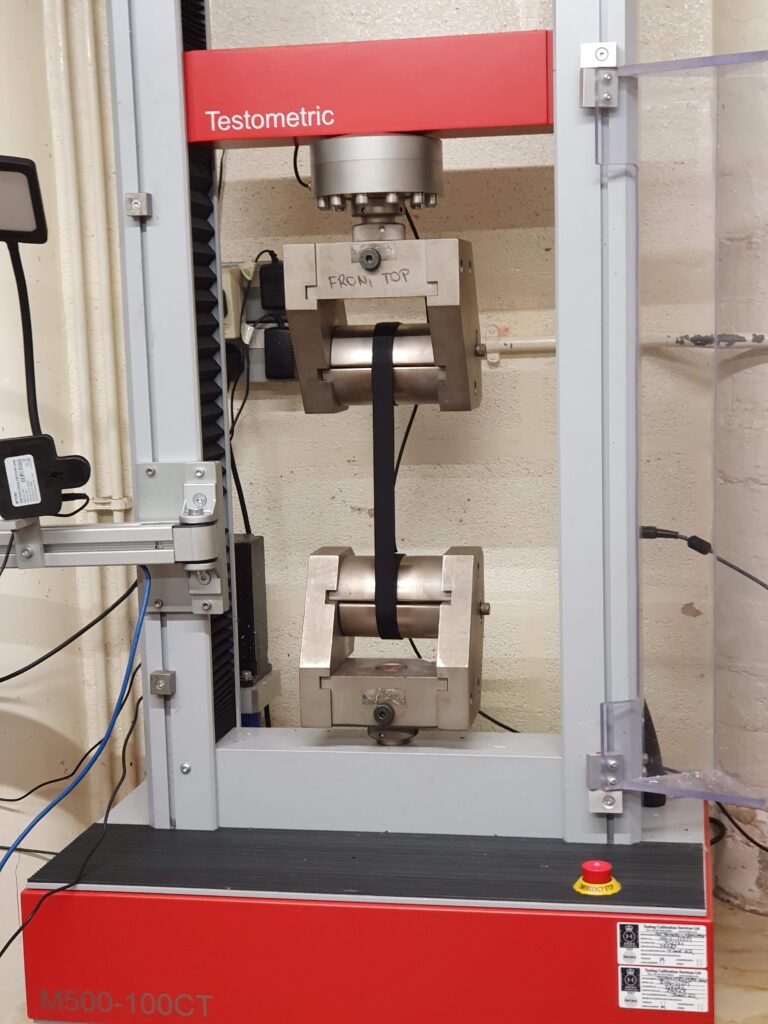
In narrow fabrics, tensile strength is influenced by:

  • Yarn material (e.g. polyester, polyamide, aramid)
  • Yarn count and construction
  • Weave structure
  • Finishing processes

High tensile strength is essential where failure is not an option, particularly in regulated or safety-critical environments.

What Is Elongation?

Elongation describes how much a fabric stretches under load, expressed as a percentage increase in length. Elongation can be measured at a specific working load or at break.

A fabric with higher elongation will stretch more before reaching its maximum load, while a low-elongation fabric will remain dimensionally stable under tension.

Tensile vs Elongation: Why Both Matter

It is a common misconception that higher tensile strength automatically means better performance. In reality, the balance between tensile strength and elongation is what determines suitability for an application.

For example:

A webbing with very high tensile strength but excessive elongation may allow too much movement.

A very low-elongation fabric may transmit shock loads more directly, increasing stress on fixings or structures.

Applications Where the Difference Is Critical

Load Restraint & Transport:

Low elongation is often preferred to maintain load stability during braking or cornering, while still meeting minimum tensile strength requirements.

Automotive & Commercial Vehicles:

Seat belts and internal restraint systems require controlled elongation to absorb energy during impact, alongside very high tensile strength.

Safety & Fall Protection:

Worker Abseiling Wearing Visibility Protective Clothing


In lanyards and safety systems, engineered elongation helps reduce peak forces on the user, while tensile strength ensures system integrity.

Industrial Lifting & Handling:

Here, minimal stretch improves precision and control, making low-elongation, high-strength webbings essential.

Key Factors to Consider When Specifying Narrow Fabrics

When choosing a narrow fabric, engineers and buyers should evaluate:

  • Working load vs breaking load
  • Acceptable stretch under load
  • Dynamic vs static loading
  • Environmental exposure (UV, moisture, chemicals)
  • Compliance with relevant standards
  • Consistency of manufacture and testing

Selecting the right balance ensures not only compliance, but long-term performance and safety.

Advice & Expert Mechanism


Choosing the Right Partner

At Bowmer Bond Narrow Fabrics, tensile strength and elongation are engineered into every product through careful material selection, weave design, and in-house testing. By understanding how these properties interact, we help customers specify narrow fabrics that perform exactly as required in their end application.

If you are specifying narrow fabrics for a performance-critical or safety-sensitive application, choosing the right manufacturing partner is essential. Speak to the Bowmer Bond Narrow Fabrics team to discuss your tensile strength, elongation, and compliance requirements. Our technical specialists work closely with customers to develop reliable, application-specific solutions — from initial concept through to tested, repeatable production.

Get in touch today to ensure your next specification delivers strength where it matters and performance you can trust.

[background_colour] => white [id] => ) ) )

When specifying narrow fabrics such as woven webbings, tapes, or straps, two mechanical properties are often discussed together but are frequently misunderstood: tensile strength and elongation. While they are closely related, they describe very different behaviours under load. Understanding the distinction is critical for selecting the right narrow fabric for safety-critical and performance-driven applications.

What Is Tensile Strength?

Tensile strength refers to the maximum force a fabric can withstand before it breaks when pulled lengthwise. It is usually measured in kilonewtons (kN) or kilograms-force (kgf) and is a key benchmark for assessing a product’s ultimate load capacity.

In narrow fabrics, tensile strength is influenced by:

  • Yarn material (e.g. polyester, polyamide, aramid)
  • Yarn count and construction
  • Weave structure
  • Finishing processes

High tensile strength is essential where failure is not an option, particularly in regulated or safety-critical environments.

What Is Elongation?

Elongation describes how much a fabric stretches under load, expressed as a percentage increase in length. Elongation can be measured at a specific working load or at break.

A fabric with higher elongation will stretch more before reaching its maximum load, while a low-elongation fabric will remain dimensionally stable under tension.

Tensile vs Elongation: Why Both Matter

It is a common misconception that higher tensile strength automatically means better performance. In reality, the balance between tensile strength and elongation is what determines suitability for an application.

For example:

A webbing with very high tensile strength but excessive elongation may allow too much movement.

A very low-elongation fabric may transmit shock loads more directly, increasing stress on fixings or structures.

Applications Where the Difference Is Critical

Load Restraint & Transport:

Low elongation is often preferred to maintain load stability during braking or cornering, while still meeting minimum tensile strength requirements.

Automotive & Commercial Vehicles:

Seat belts and internal restraint systems require controlled elongation to absorb energy during impact, alongside very high tensile strength.

Safety & Fall Protection:

Worker Abseiling Wearing Visibility Protective Clothing


In lanyards and safety systems, engineered elongation helps reduce peak forces on the user, while tensile strength ensures system integrity.

Industrial Lifting & Handling:

Here, minimal stretch improves precision and control, making low-elongation, high-strength webbings essential.

Key Factors to Consider When Specifying Narrow Fabrics

When choosing a narrow fabric, engineers and buyers should evaluate:

  • Working load vs breaking load
  • Acceptable stretch under load
  • Dynamic vs static loading
  • Environmental exposure (UV, moisture, chemicals)
  • Compliance with relevant standards
  • Consistency of manufacture and testing

Selecting the right balance ensures not only compliance, but long-term performance and safety.

Advice & Expert Mechanism


Choosing the Right Partner

At Bowmer Bond Narrow Fabrics, tensile strength and elongation are engineered into every product through careful material selection, weave design, and in-house testing. By understanding how these properties interact, we help customers specify narrow fabrics that perform exactly as required in their end application.

If you are specifying narrow fabrics for a performance-critical or safety-sensitive application, choosing the right manufacturing partner is essential. Speak to the Bowmer Bond Narrow Fabrics team to discuss your tensile strength, elongation, and compliance requirements. Our technical specialists work closely with customers to develop reliable, application-specific solutions — from initial concept through to tested, repeatable production.

Get in touch today to ensure your next specification delivers strength where it matters and performance you can trust.

Posted 29th January 2026 by Bowmer Bond

See more posts from Bowmer Bond

Related Articles

Tensile Strength vs Elongation in Narrow Fabrics

...

Merry Christmas from all at Bowmer Bond

...

Supporting Innovation in Mobility, Rehabilitation and Assisted Living

...

Smarter Webbing Choices for Marine Safety: Certified Quality To EN ISO 12402-7:2020

...

Want To Get In Touch?

Whatever your Narrow Fabric requirements, we are sure we can help.

Please complete our   Contact form

A member of the Sales team will contact you.

Privacy Overview

This website uses cookies so that we can provide you with the best user experience possible. Cookie information is stored in your browser and performs functions such as recognising you when you return to our website and helping our team to understand which sections of the website you find most interesting and useful.